Calm Pets Around the Vacuum: Stress Signs & Training
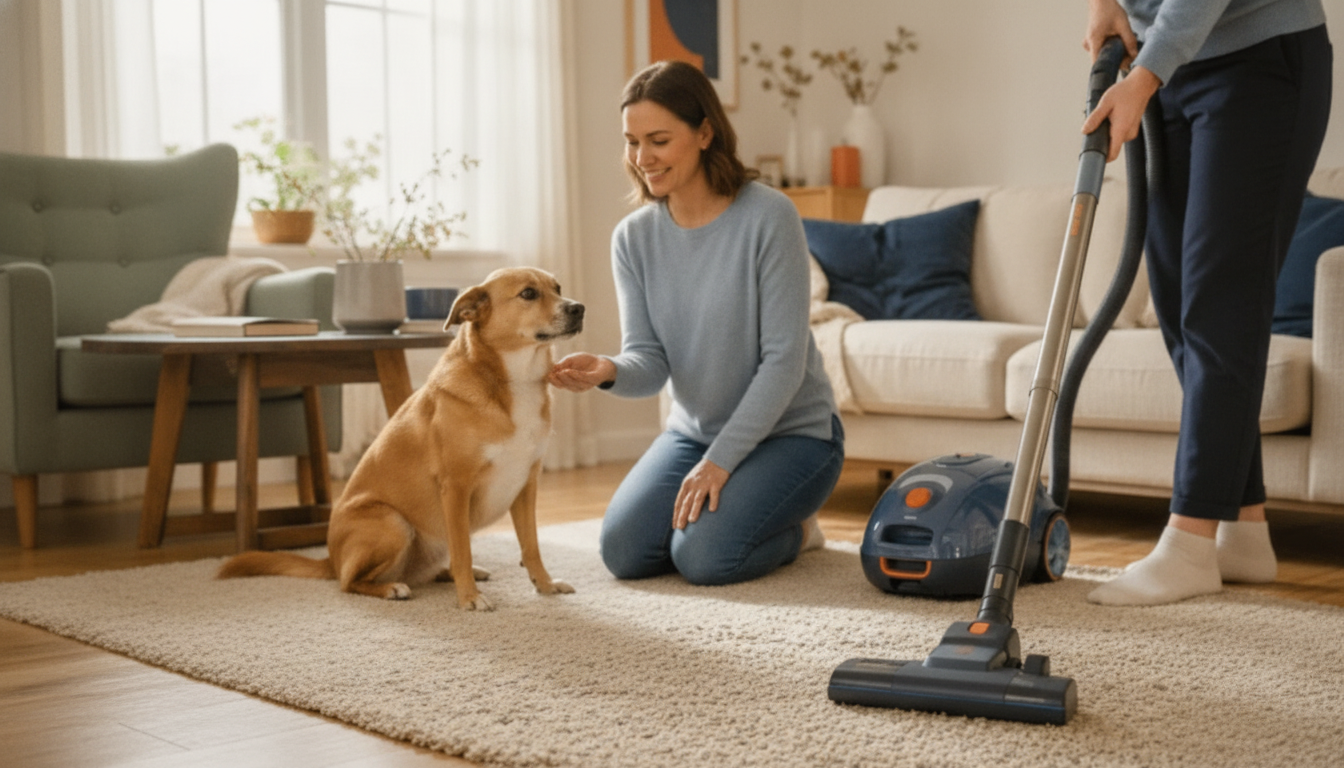
Why vacuums feel threatening to pets
To many pets, a vacuum isn’t “just loud”—it’s a fast-moving, unpredictable object that fills the room with strange sensations. Understanding what your dog or cat is reacting to makes it easier to lower stress quickly and build a long-term plan.
- Noise sensitivity: Sudden, low-frequency sound can feel overwhelming, especially for anxious dogs and cats or pets with noise sensitivity.
- Unpredictable movement: A vacuum changes direction, rolls toward crumbs, and can look like it’s “chasing” things across the floor.
- Vibration and airflow: The rumble through the floor plus the air blast can add extra sensory pressure.
- Past learning: One scary moment—like being cornered, startled awake, or having a tail brushed—can create a lasting negative association.
Reward-based approaches are widely recommended for behavior change and emotional comfort, especially for fear-based reactions. For background on humane training principles, see the American Veterinary Society of Animal Behavior (AVSAB) position statements.
Signs of vacuum stress to watch for
Pets show stress in different ways, and the early signs are easy to miss. Catching subtle signals helps you pause, increase distance, and keep training from tipping into panic.
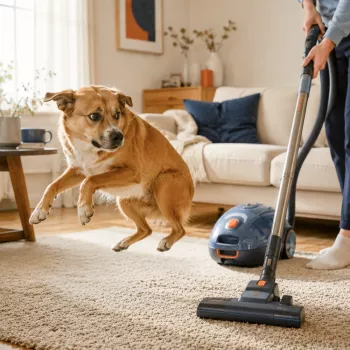
- Dogs: barking, lunging, pacing, trembling, tail tucked, panting, drooling, hiding, or guarding behavior.
- Cats: bolting, hiding, flattened ears, dilated pupils, hissing, swatting, or refusing to come out after cleaning.
- After-effects: clinginess, restlessness, reduced appetite, or avoidance of certain rooms.
If you’re noticing persistent fear or anxiety in daily life (not just vacuum time), the ASPCA resources on fear and anxiety can help you recognize patterns worth addressing with your vet or a behavior professional.
Set up a calmer cleaning routine
Routine changes can reduce stress immediately, even before training begins. The goal is simple: keep your pet from feeling trapped, surprised, or “chased,” and replace vacuum time with predictable comfort.
- Create a safe zone: Use a closed room, covered crate, or quiet corner with bedding, water, and a familiar scent.
- Separate pet from the vacuum: Baby gates or doors prevent the vacuum from approaching your pet and reduce the chance of lunging or swatting.
- Predictability helps: Keep a consistent sequence (safe zone → treats → vacuum → calm release) and, when possible, vacuum at similar times.
- Reduce sensory load: Close curtains, run a fan or white noise, and keep voices calm and steady.
- Add a comfort activity: Offer a food puzzle, lick mat, or long-lasting chew reserved only for vacuum sessions.
For a structured checklist you can reuse each week, Helping Pets Handle Vacuum Stress is a practical reference for setting up safe zones, tracking progress, and keeping sessions short and consistent.
Step-by-step training: from fear to neutrality
The most reliable approach is gradual desensitization paired with rewards (often called counterconditioning). The vacuum becomes a predictor of good things—and your pet learns they have space and control.
Quick adjustments that lower stress immediately
What not to do
Common triggers and practical fixes
| Trigger | What it can look like | Try this first |
|---|---|---|
| Sudden start-up noise | Bolting, barking, hiding | Start vacuum in another room; use white noise; reward calm |
| Vacuum approaches pet | Lunging, swatting, growling | Use doors/gates; keep distance; train a “place” cue |
| High-pitched attachment | Trembling, freezing, refusal to enter room | Switch attachments; lower setting; shorter sessions |
| Vibration on hard floors | Pacing, panting, startled jumps | Add runner/rug; vacuum when pet is elsewhere |
| History of being chased | Intense fear or aggression | Restart at vacuum-off stage; consider professional behavior help |
When to get professional help
For general training and behavior guidance, the RSPCA behavior and training advice is a helpful reference point for reward-based habits and management.
A supportive resource for building calmer habits
Consistency is what changes the emotional meaning of the vacuum. If you want a structured approach to routine, tracking, and progression, Helping Pets Handle Vacuum Stress can serve as an at-home guide for safe zones, predictable steps, and realistic milestones.
It can also help owners stay calm and steady during training—an underrated part of success. For those working on their own routines and stress management alongside pet training, Whole You: Holistic Wellness Guide offers a simple framework for daily habits that support consistency and follow-through.
FAQ
How long does it take for a pet to get used to the vacuum?
Mild reactions can improve in a few days to a couple of weeks with short, consistent practice, while stronger fear often takes several weeks or longer. Progress depends on staying under your pet’s stress threshold and repeating calm, reward-based sessions regularly rather than rushing.
Should pets be in the same room while vacuuming?
Separation is usually the safest starting point because it prevents the vacuum from approaching and gives your pet a clear escape option. Once your pet can stay relaxed with the vacuum noise at a distance during training sessions, you can gradually reintroduce brief same-room exposure using gates and plenty of space.
What if my dog tries to attack the vacuum?
Prioritize safety: increase distance, use doors or gates, and leash if needed to prevent rehearsal of lunging or biting. Redirect to a trained “place” station and reward staying there, and contact a professional if the behavior escalates or feels unsafe to manage at home.









Leave a comment